
WORLD WAR ONE
DEAR FOLKS AT HOME
Letters from my grandfather, Bert A. Bourne, an American soldier serving in Europe during World War One
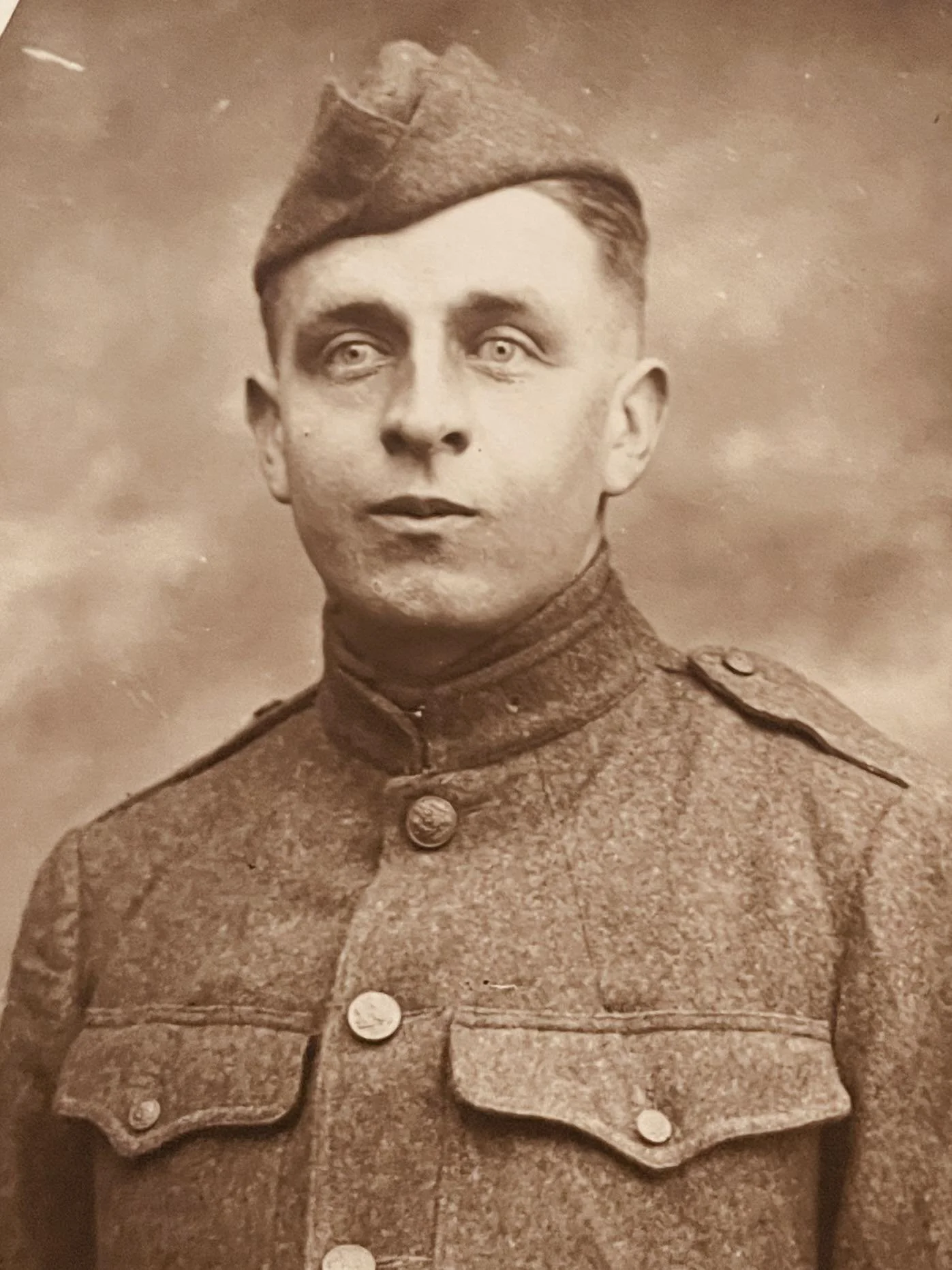
Bert Allen Bourne, May 1918
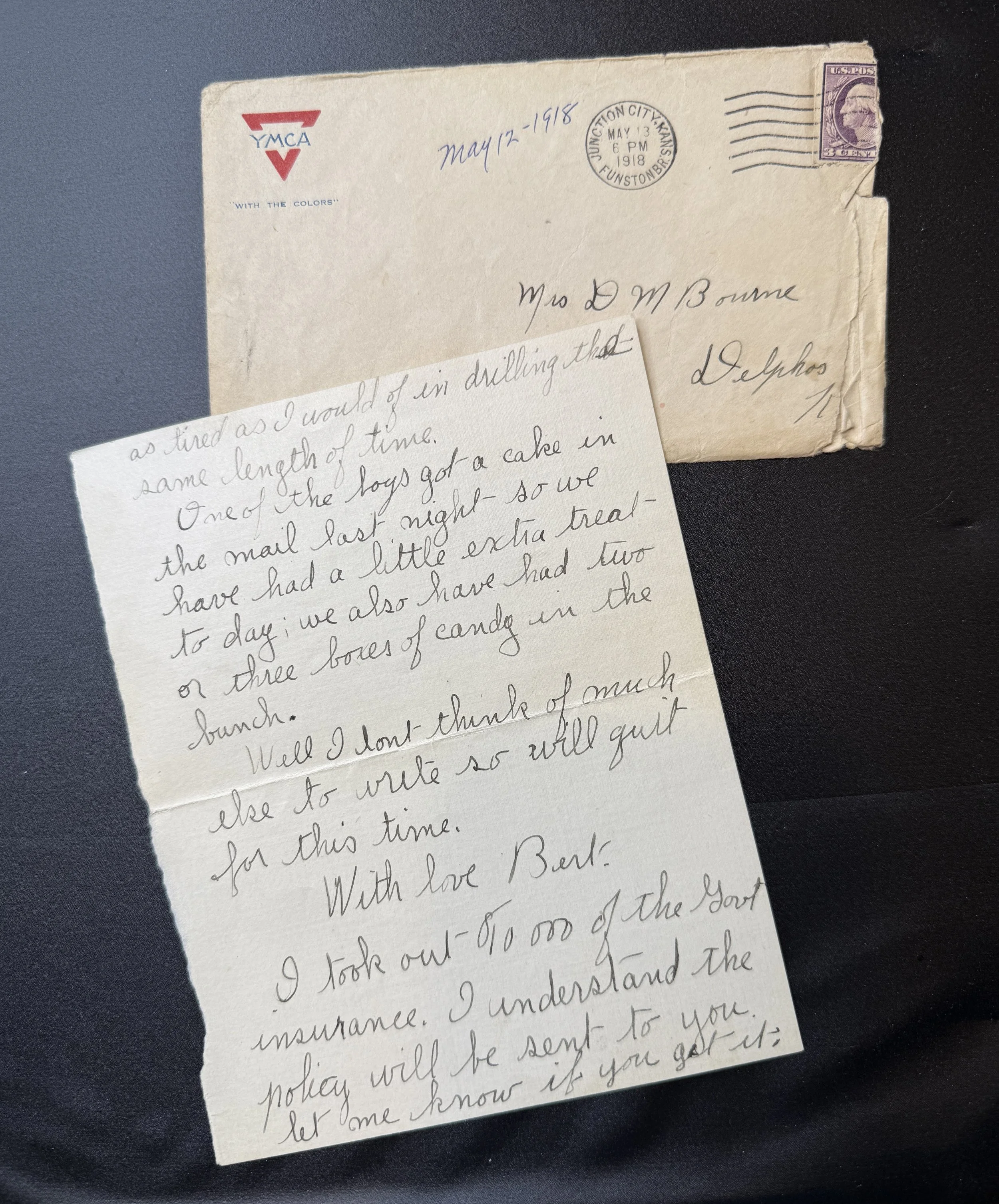
‘We drew our pay yesterday, $5 for April’
May 12, 1918
Dear Ma and all the Rest:
Received your letter and the bag last night also a letter from Bessie and will write a few lines today.
The bag is OK. just what I wanted.
It is trying to rain a little to day but doesn’t seem to be able to get at very hard. Would like to see enough to lay the dust for a few days anywhay. It seems like the dust begins to blow here after a rain as soon as the sun comes out. The wind the other day blew the YMCA tent to pieces and it seemed at times as tho our tents would be blown away but I guess they all stood it alright.
It looks now as tho we would be moved to Funston anytime now.
We drew our pay yesterday $5.00 for April and have been having several inspections and examinations. Had rifle, mess Kit and foot inspections yesterday and had throat and heart exams to day.
When the rifles were issued to us they were covered with grease to prevent dust and we have had to put in a good deal of our spare time cleaning them. Mine was one of the few that passed inspection. Most of the boys had to do some more work on theirs.
Our company has been under quarantine since Thursday no one being allowed to leave or enter the Company street but it was lifted last night so we have a little liberty again.
One of the boys in my tent was doing stenographic work at the infirmary when the quarantine was declared and didn’t get back until this morning.
We had our third and last typhoid and smallpox inoculations Friday. This shot didn’t seem as bad as the other two and not many of the boys were sick this time.
We had strawberry shortcake for dinner to day, it sure tasted good also lemonade, mashed potato, beef, peas, cocoa, hot or cold tea and lemonade to drink here. Only one at each meal of course.
Our meals are all dished out in two dishes and of course is pretty mixed together. We usually get the dessert, fruit or pudding in on dish and the vegetables, meat and other stuff in the other. Then we have a cup for coffee etc. and a knife fork and spoon to eat with, not much like we have at home but we are usually hungry enough so that we don’t mind that.
Well the sun is coming out and it looks like the rain is over for this time.
As you did not send the Kodak with the bag, I suppose you had not got my letter yet when you sent it but it doesn’t make any difference you can send it some time later.
We took a hike of about 6 miles or a little more Friday forenoon. Didn’t mind it much tho and didn’t get as tired I would of in drilling that same length of time.
One of the boys got a cake in the mail last night so we have had a little extra treat to day; we also have had two or three boxes of candy in the bundh.
Well I don’t think of much else to write so will quit for this time.
With love Bert
I took out $10,000 of the Govt insurance. I understand the policy will be sent to you, let me know if you got it.
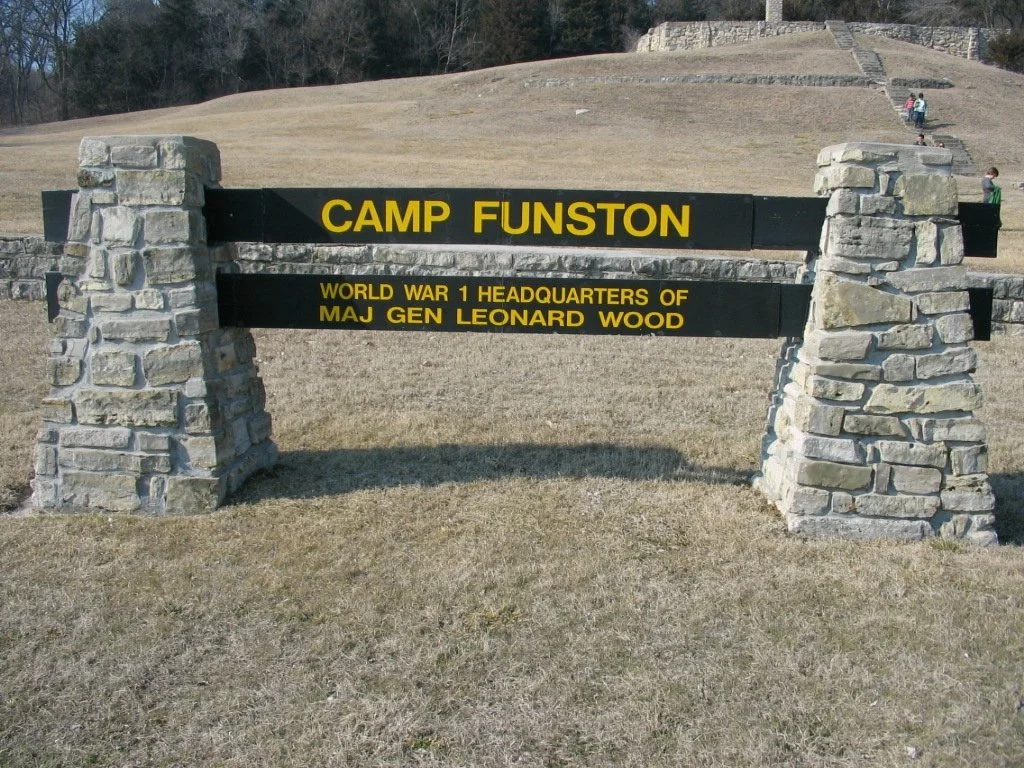
Camp Funston was established as one of sixteen Divisional Cantonment Training Camps during World War I. Construction of the 2,000 acre camp began during the summer of 1917 and eventually encompassed approximately 1,400 buildings
Major General Leonard Wood commanded the camp. During World War I, nearly 50,000 recruits from the Great Plains trained here. They became part of the 89th Division that deployed to France in the spring of 1918. In addition, the 10th Division and black soldiers assigned to the 92nd Division received their basic training at Camp Funston.
The first recorded cases of what came to be the world-wide influenza epidemic were first reported here in March 1918.
‘Things will be much more convenient here but we probably will have to work a good deal harder.’
May 14, 1918, Camp Funston Kans.
Dear Folks
Came over to the barracks at Funston yesterday afternoon and was assigned to what I suppose will be our permanent Co. Things will be much more convenient here but we probably will have to work a good deal harder. Went to the Messiah last night at the 353rd Regimental Hall.
There was sure a mob there.
It was the same performance that is put on at Lindsborg every year. Will write more later when I have time.
Bert
Headquarters Co 353rd Inf.
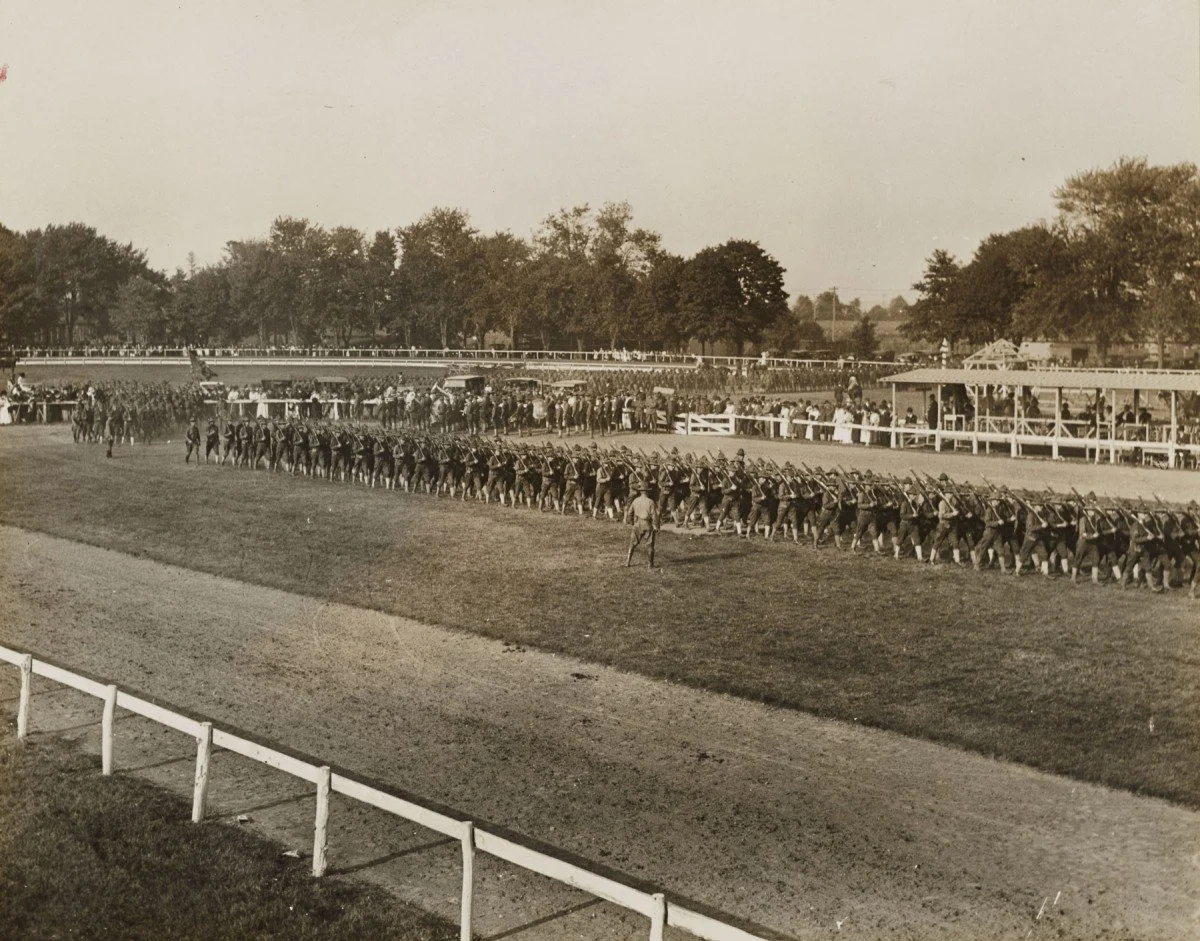
Soldiers of the New York National Guard's 69th Infantry regiment, parade at the Nassau County Fairgrounds in September 1917 as the unit trained at Camp Albert Mills at the site of present day Garden City, N.Y. | Photo courtesy U.S. Army
History of Camp Mills
By Marcella Tozer
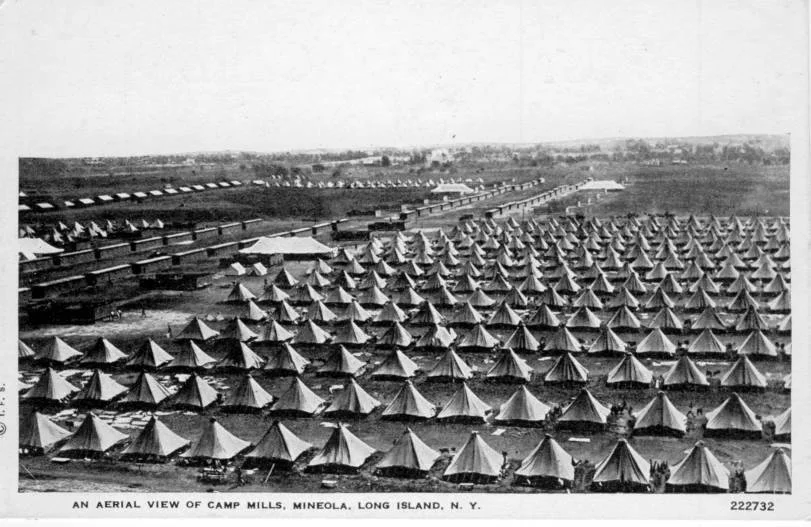
Camp Mills in Mineola, New York, was a significant World War I military facility that served as both a training and embarkation camp for American troops, as well as a debarkation point after the war. Established in September 1917, it quickly became one of the largest training centers for the American Expeditionary Forces.
Key Points in Camp Mills' History:
Early Years (1917-1918):
Initially a temporary tent camp, Camp Mills served as a mobilization and training location for units like the 42nd Division, also known as the Rainbow Division, and later the 41st Division. It became a vital embarkation point for troops heading to France.
Post-War Debarkation (1918-1921):
After the armistice on November 11, 1918, Camp Mills was repurposed as a debarkation camp for soldiers returning from Europe through the Port of Hoboken, New Jersey.
Expansion (1938-1961):
In 1938, Camp Mills was reopened as an expansion of Mitchel Field (later Mitchel Air Force Base). It was eventually decommissioned in 1961.
Below: An ariel view of Camp Mills’ tent city is shown on this post card from 1917-1918.
‘We saw the Goddess of Liberty, the skyscrapers, Brooklyn bridge and other famous sights.’
May 28, 1918, Camp Mills, N.Y.
Well we have reached our temporary destination at last.
Got here this afternoon. Arrived in New York this morning and after some delay was loaded on to a ferry and came down the Hudson River around past New York City, Manhattan Island and on to Long Island where we loaded onto the train again and rode 20 or 30 miles to the Camp.
It is sure quite sight to see.
We saw the Goddess of Liberty, the skyscrapers, Brooklyn bridge and other famous sights. We passed under Brooklyn bridge, also 2 other, bridges just as big. Saw lots of big ocean liners and all kinds of tugboats, ferries, ships etc.
The big ocean vessels are camouflaged as they call it; painted in streaks as spotted, and all kinds and colors of paints. Tike certainly look queer.
We came down the Hudson in the night I guess so did not get to see much of it.
They say that the trip down the Hundson is the prettiest part of the trip
Part of the 89th Div. is already here and more men are coming in the time.
Don't know just how large this camp is but it must be pretty big from what I have seen of it so far.
Seems to be lots of airplanes here. Can see 8 or 9 just part of the time.
Don't believe we will be bothered with the dust very much here, had shower this afternoon but the soil is gravelly and it doesn't seem to make things muddy,
We are quartered in tents here similar to the ones we had at the D.C. but these are without the wood floors and sides.
We stopped in Syracuse, NY., last night about sundown and had quite a time, while there. We were not allowed off the train but the band got off and gave a concert and we were treated to cake, cookies, candy, gum cigarettes and tobacco by the Red Cross ladies.
Some of the officers and the Red Cross girls danced a few times on the platform.
We were treated by the Red Cross at most all of the towns we stopped at and what we got was very acceptable as our eats on the train did not consist of a very big variety, mostly canned stuff.
It is quite a right to see big factories in these eastern cities.
Some of these big plants are almost as big as the whole town of Delphos. Big steel mills, auto factories, car and automotive factories, etc.
Take it all around so far our trip has been about as enjoyable as any I ever took but I don't know as I would want to keep it up much longer.
We had plenty of room on the train and we got off and exercised enough so that we didn't get so tired of riding.
We were not allowed off the trains anytime except when we got off to parade. We were better off than the other companies as we had the band with us on our train and they played at every stop.
Well, it is getting pretty dark to write so will quit for this time.
You can address me as below at present
Hq. Co. 353rd Inf. 89th Div. Camp Mills
Hempstead N.Y.
With Love, Bert.
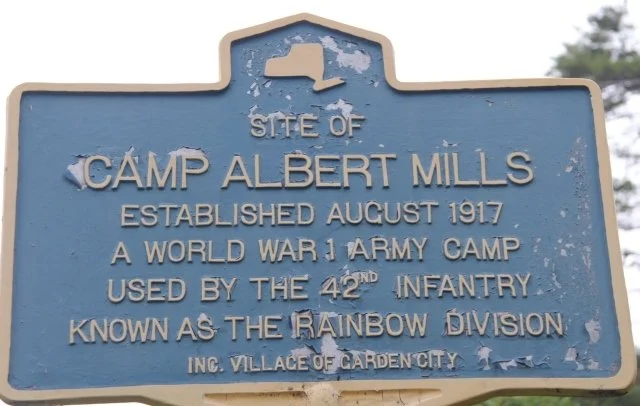
Site of Camp Albert Mills Established August 1917 A World War 1 Army Camp Used by the 42nd Infantry Known as the Rainbow Division.